 Ask a question!


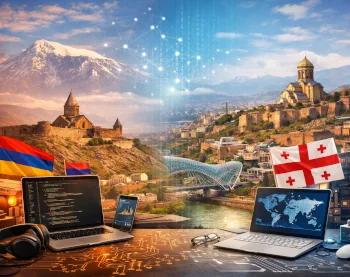
In recent years, Armenia and Georgia have become two key jurisdictions for registering sole proprietorships by citizens of the former CIS. This issue is particularly relevant for freelancers, remote IT specialists, designers, marketers, and consultants working with clients from the EU and the US.
At first glance, both countries appear similar: simple registration, relatively low taxes, and a favorable attitude toward foreigners. However, in practice, there are differences, and these often determine the final choice.
In this article, we will examine:
- the advantages and disadvantages of sole proprietorships in Armenia (especially for citizens of the Russian Federation and Belarus),
- taxes and mandatory payments,
- residence requirements,
- accounting,
- banking and tax exchanges.
Who is suited to becoming a sole proprietor in Armenia?
Registering as a sole proprietor in Armenia is most often of interest to:
- IT specialists (development, testing, DevOps, analytics),
- freelancers working on contracts with foreign clients,
- consultants and digital professionals,
- those who already live or plan to live in Armenia,
- those for whom the local banking infrastructure is important.
Important: foreigners (including citizens of Russia and Belarus) have the right to register as individual entrepreneurs in Armenia—citizenship alone is not a restriction.
Do you need to live in Armenia to be a sole proprietor?
The key point is not sole proprietorship registration, but tax residency.
- You can register as a sole proprietor without permanent residence.
- As a rule, you become a tax resident of Armenia if you are in the country for 183+ days a year or if you have a “center of vital interests” there.
- Residents pay tax on their worldwide income, while non‐residents pay tax only on income from Armenian sources.
Practice for remote workers
- If you actually live in Armenia, residency is almost inevitable.
- If you live in another country and work remotely for foreign clients, the question of the source of income and the structure of contracts becomes critically important.
At this point, you almost always need a competent tax analysis, not generic advice.
Taxes for sole proprietors in Armenia: what freelancers need to know
1. Turnover tax
One of the most popular regimes for small businesses:
- tax is calculated based on turnover rather than profit,
- simplified reporting,
- minimum expenditure requirements.
Suitable for freelancers with regular income and a simple business model.
2. Microbusiness (0 %)
Armenia has a microbusiness regime with a zero rate on basic taxes, but:
- it is not available for all types of activities,
- there are restrictions and conditions,
- certain mandatory payments remain.
It does not always apply to IT and freelancing — it is important to check the specific activity.
3. IT benefit: 1 % for IT activities (effective from 2025)
One of the main arguments in favor of Armenia:
- a 1 % rate on turnover applies to certain types of IT activities,
- the regime requires correct classification of activities and compliance with conditions.
This is a really strong advantage if you qualify for it.
Mandatory payments in addition to taxes
Even with low rates, it is important to consider additional obligations:
- mandatory health insurance (fixed annual contribution for income above a certain threshold),
- social security contributions (depending on the regime and status).
Many people make the mistake of only considering “1 % or 0 %,” forgetting about the associated contributions.
Accounting for sole proprietors in Armenia
For a typical freelancer without employees, accounting usually includes:
- setting up the correct tax regime,
- recording income,
- filing tax returns (most often quarterly),
- monitoring limits and mandatory payments.
It is possible to do this yourself, but in practice, an accountant is often needed:
- saves time on filing all necessary reports and taxes,
- reduces the risk of errors,
- helps to pass audits and bank compliance correctly.
- $80—100/month ($40 for zero reporting).
Banking and tax exchange: an important point
From 2025, Armenia will introduce automatic exchange of financial information (CRS) with a number of countries.
What this means:
- banks record the tax residency of their clients,
- information may be transferred to the tax authorities of partner jurisdictions.
For citizens of the Russian Federation and Belarus, this is a factor that cannot be ignored, especially when maintaining tax residency in another country.
Comparison: Individual entrepreneurs in Armenia vs. Individual entrepreneurs in Georgia
| Parameter | Armenia | Georgia |
|---|---|---|
| Registration of an individual entrepreneur by a foreigner | Yes | Yes |
| Popular mode | Turnover tax / IT 1 % | Small business 1 % |
| Turnover tax | Yes | Yes |
| Limits | Yes (depending on the mode) | Clear limit |
| Mandatory additional payments | Yes (medicine, social) | Нет |
| IT benefits | Yes (subject to conditions) | Yes |
| Accountant needed | Yes, almost always | You can do without an accountant |
| Criterion | Armenia | Georgia |
|---|---|---|
| CRS exchange | Yes (from 2025) | Yes, but without auto‐exchange with the Russian Federation |
| Bank compliance | Average | Relatively mild |
| Link to residence | Pronounced | Flexible |
| Suitable for “pure” freelancing | Yes, with reservations | Yes, very often |
Why many freelancers ultimately choose Georgia
In practice, sole proprietorships in Georgia are often chosen because of:
- a simpler and more understandable model for remote workers,
- a minimum number of mandatory payments,
- a territorial approach to taxation,
- the absence of automatic CRS exchange with the Russian Federation,
- convenience of living and services for expats.
This does not make Armenia “worse” — it’s just that Georgia often turns out to be a more versatile solution for working with the EU/US without unnecessary tax and compliance risks.
Conclusion
Armenia is a good choice if:
- you actually live or plan to live in the country,
- you definitely qualify for IT benefits,
- the local banking system is important to you.
Georgia is often the best option if:
- you are a freelancer or remote IT specialist,
- you work with foreign clients,
- you want a simple, stable, and proven sole proprietorship model.
Not sure which country is right for you?
We can help you compare Armenia and Georgia based on your specific situation: income, residency, banks, taxes, and risks.
👇 Consultation without templates — only practical scenarios.